

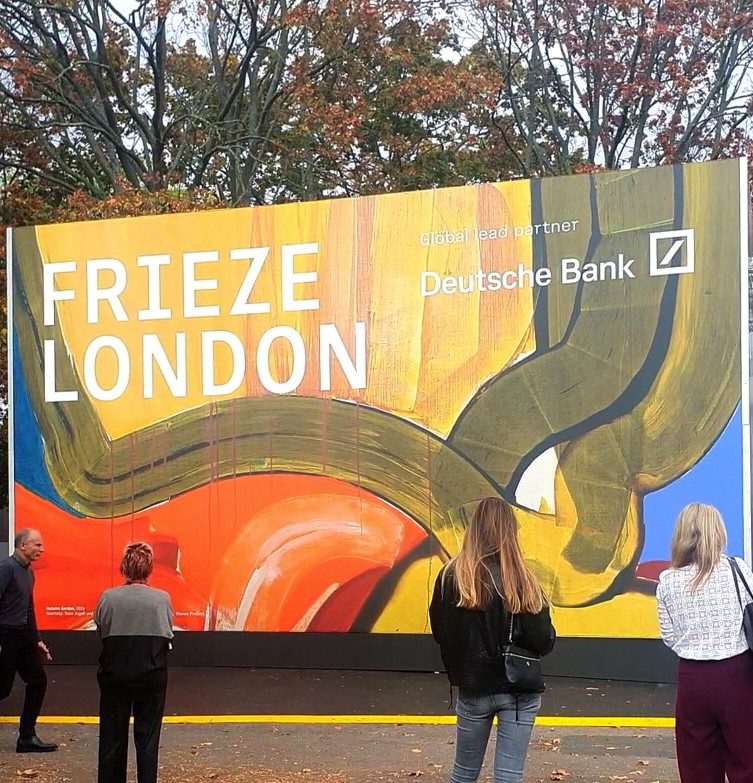
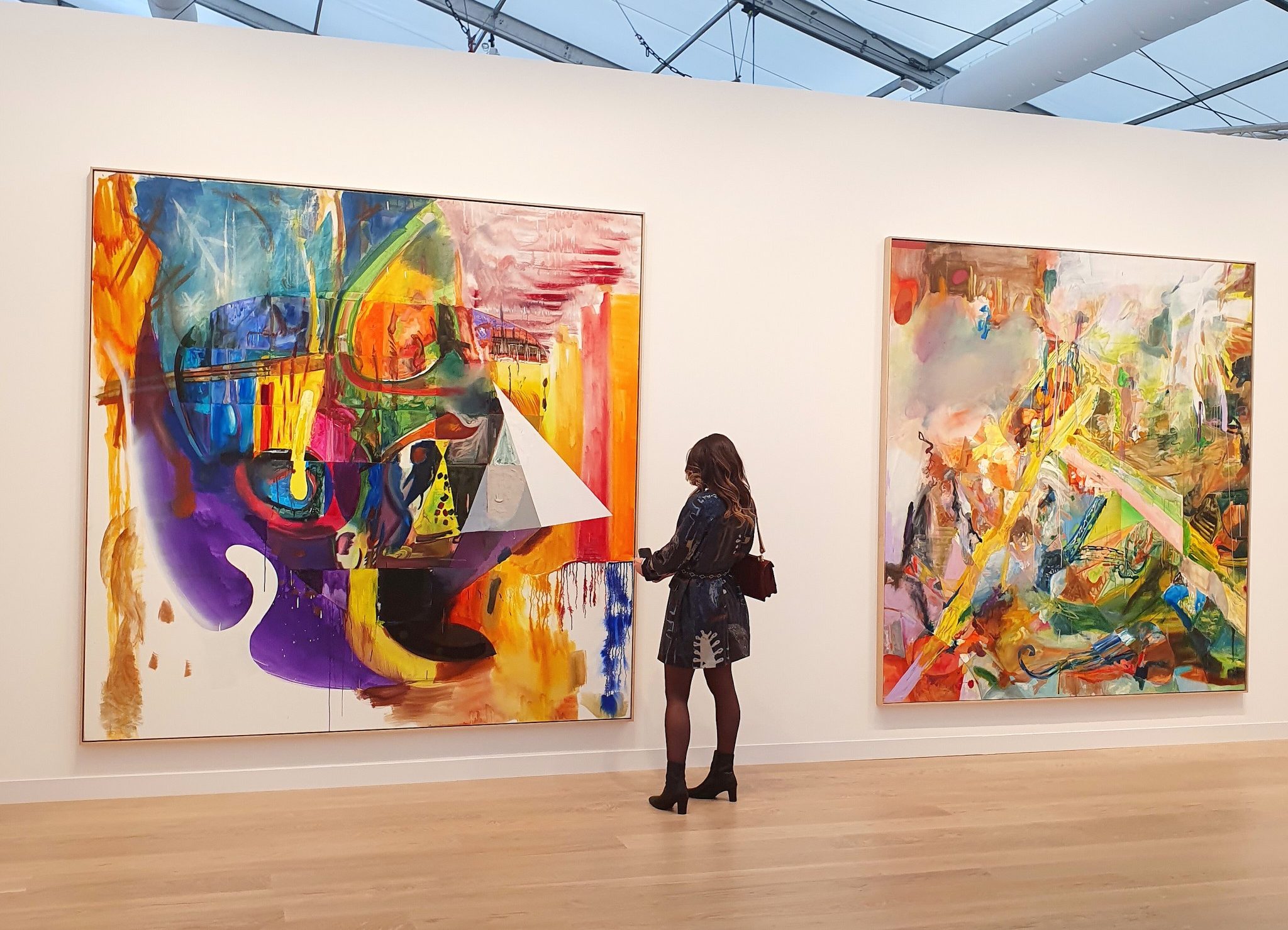
Following our Frieze London 2026 guide, I visited the fair at London’s Regent’s Park on 15 October. Among the works competing for attention, I found some distinctive ideas: pieces whose visual appeal opened into thoughtful explorations of identity, consumption and the expectations shaping our lives. What interested me most was how those ideas took form, through material choices, carefully constructed environments and invitations to participate.
Interviews with Award-winning artists, Theo Triantafyllidis and Ken Nwadiogbu offered a closer understanding of the thinking behind their installations. Elsewhere, conversations with gallery representatives and time spent looking revealed details that weren’t immediately apparent.
These five Frieze London 2026 highlights each gave something to engage with beyond a first impression, whether through playing, listening, looking closer or questioning something familiar.
1. Theo Triantafyllidis’s Feral Metaverse: four strangers, one spider
I watched four strangers become an impromptu team. Joining at different moments, they took their places on the legs of Theo Triantafyllidis’s Feral Metaverse (Spider) (2026), picked up controllers and worked towards a shared goal in its multiplayer game.
Its sprawling legs, wrapped in pale textiles and ending in repurposed trainers, doubled as seats for players gathered around its embedded screens. Built from steel, wood and sculpted foam, the spider brought an unexpectedly domestic softness to its unfamiliar form. Four individual screens served the players, with speakers above them and a larger wall screen allowing passers-by to follow the action.
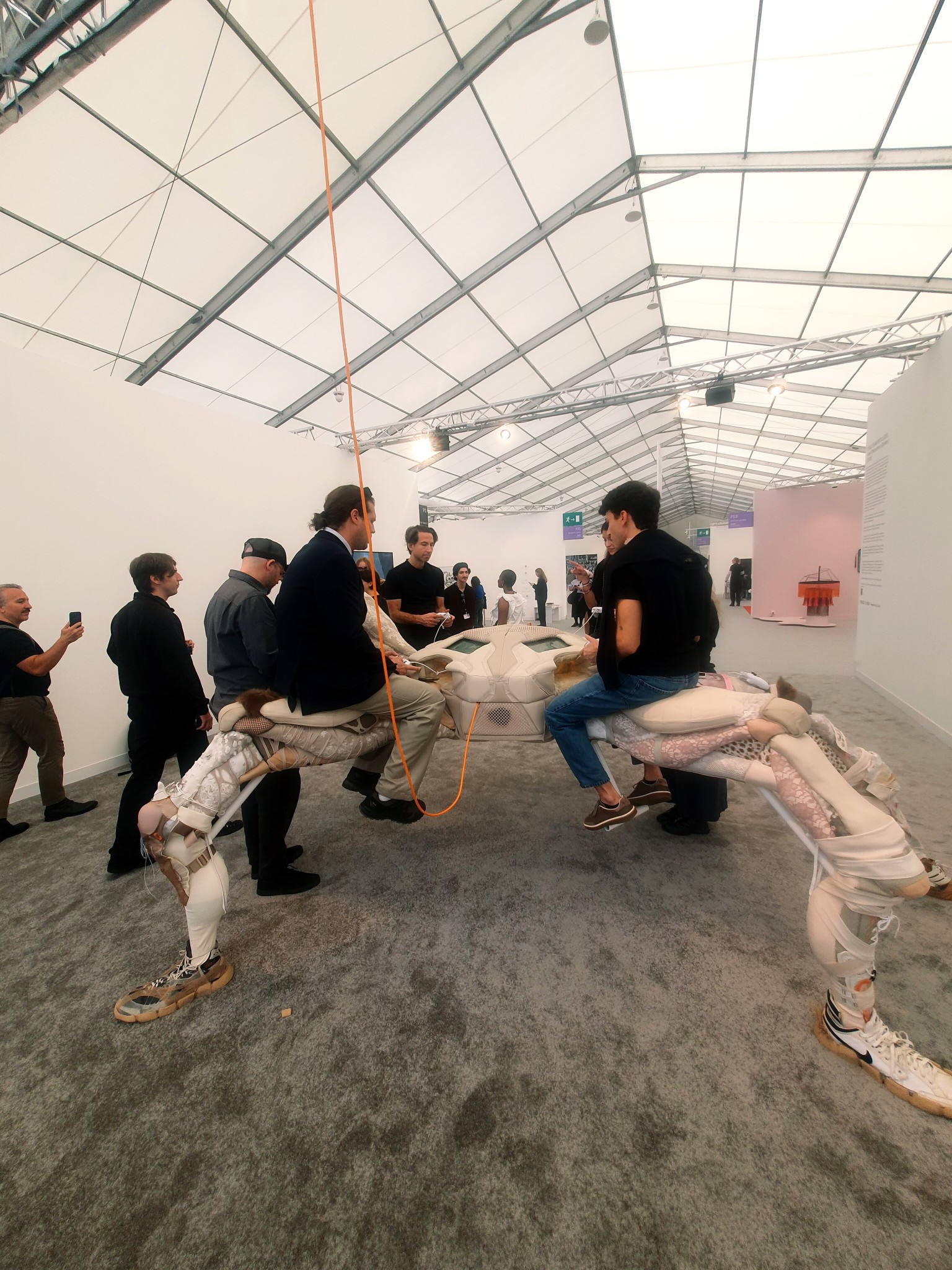
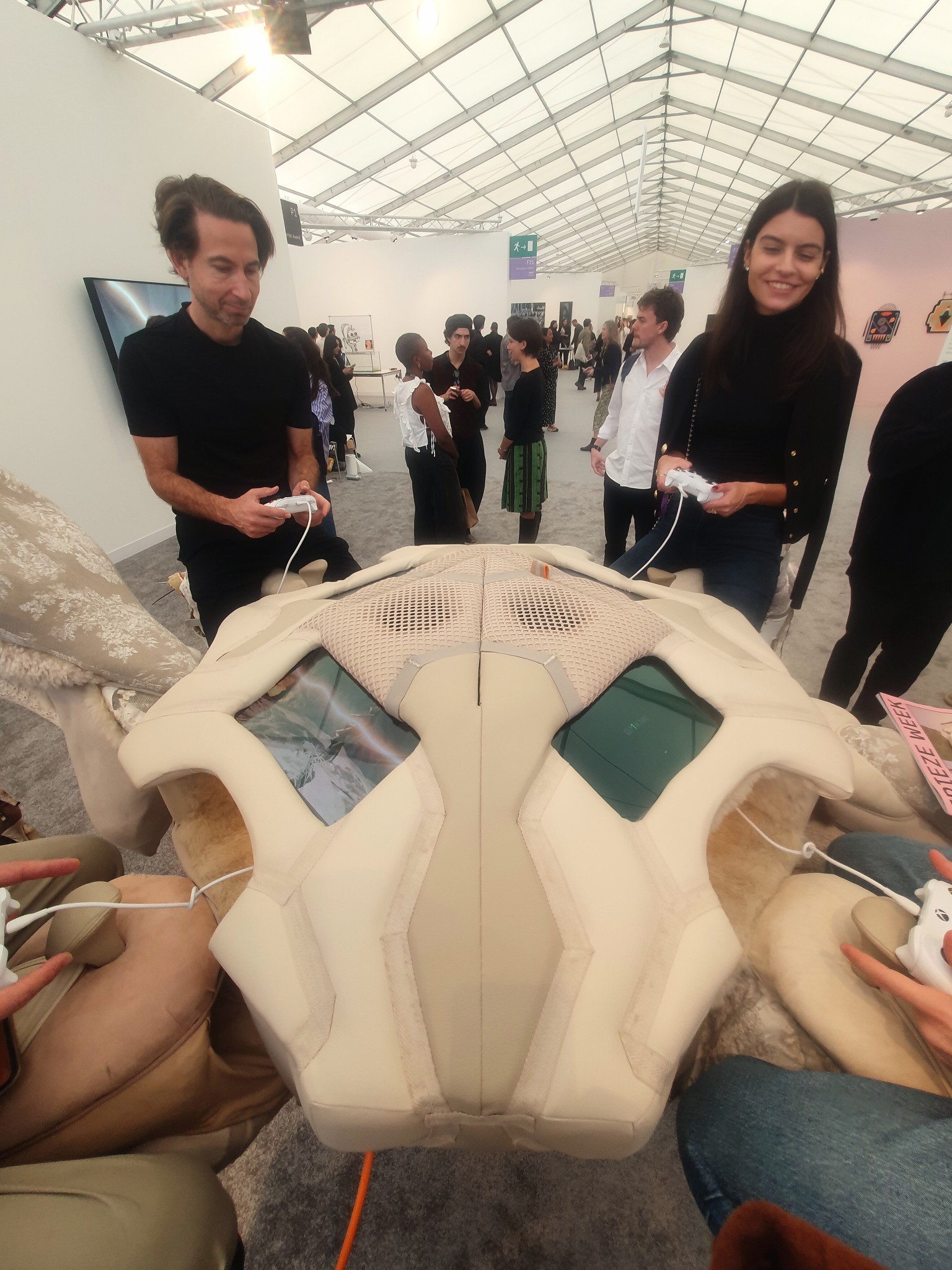
Triantafyllidis was nearby, watching visitors interact with the installation and chatting with people around it. When I interviewed him beside the piece, he described how its audience helped complete it. “It’s a social sculpture that is completed by people hopping on and playing the game,” he told me. His description gave the scene around us another significance: participation was part of the work’s construction.
Created for the 2026 Frieze London Artist Award, the installation brings sculpture and a live multiplayer game into the same space. “It is about collaboration and togetherness,” Triantafyllidis explained. His ambition for a communal space also embraced its bodily, unfamiliar qualities:
“More primal, more embodied, and more strange, honestly.”
— Theo Triantafyllidis
Watching those four strangers cooperate made that idea tangible. Each had an individual screen and Xbox controller, yet their efforts became collective. What stayed with me was how this strange, welcoming structure gave people who had arrived separately a reason to work together.
Where to find Artist at Frieze London: Stand Number P1 · Frieze London Artist Award
2. Ken Nwadiogbu: a room alive with Igbo identity
Opening directly onto Frieze’s main gallery aisles, the Degussa Lounge drew visitors into a dark, textile-lined interior. Inside, Ken Nwadiogbu’s vivid yellow figures stood out against densely textured walls. Small sculpted hands gripped the paintings’ edges, as though the room itself were offering the works to its visitors.
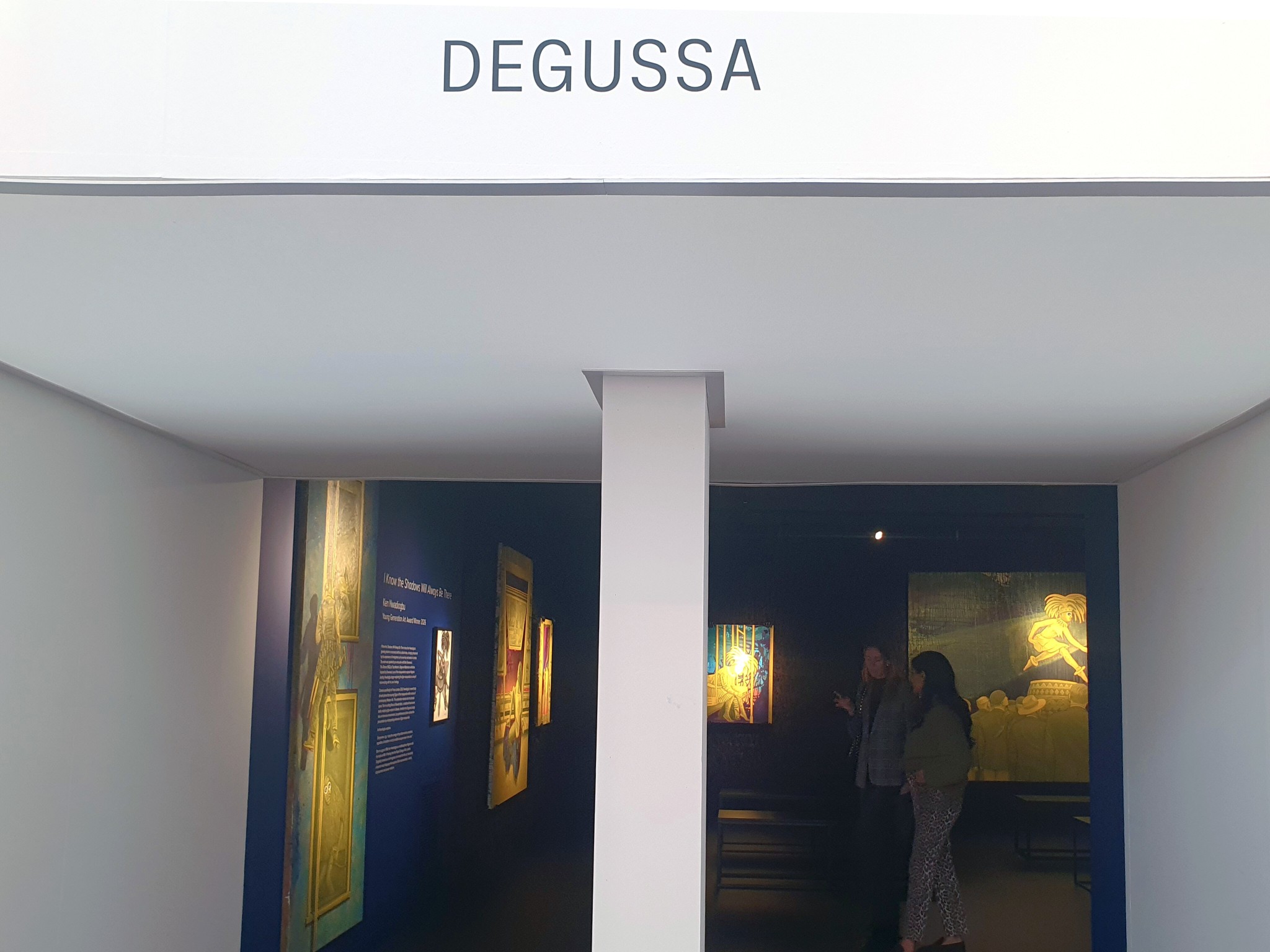
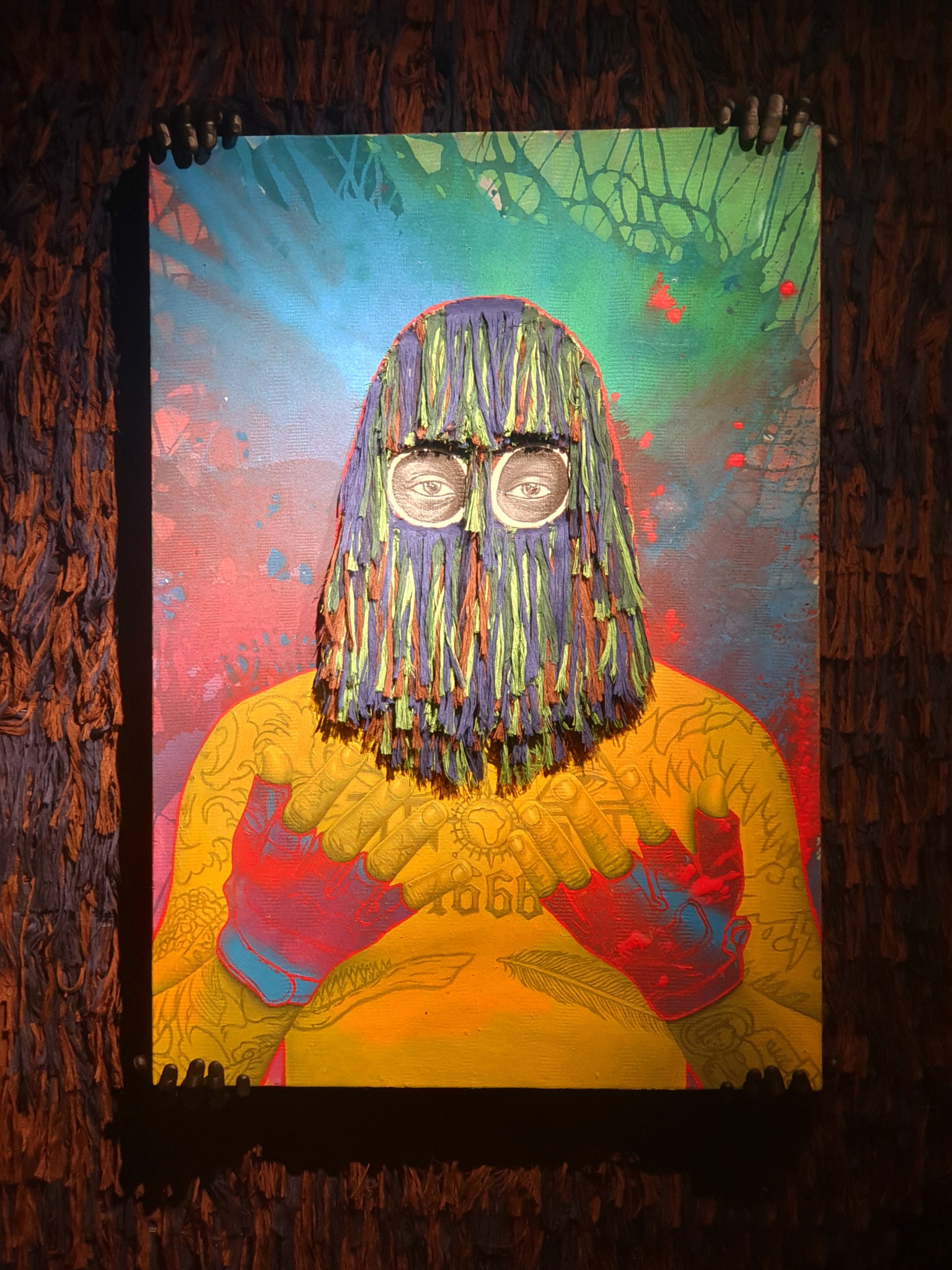
His presentation, I Know the Shadows Will Always Be There, followed his win of the 2026 Young Generation Art Award, an initiative by Degussa and Monopol. Interviewing him, I learnt how moving to London had sharpened questions about his identity. From Anambra State and raised in Lagos, he found himself asking: “Who am I? Am I Nigerian? Am I a global person? Or am I Igbo?”. His questions speak to the experience of inhabiting a cultural “third space”, where identity is continually negotiated across places, traditions and ways of belonging.
An encounter with Ben Enwonwu’s oil painting The Dancer (1962) at Tate Modern’s Nigerian Modernism exhibition helped him reconnect with his Igbo heritage. Nwadiogbu explained that the Agbogho Mmuo masquerade traditionally involves a male performer embodying a maiden spirit. He understood Enwonwu’s portrayal of the figure as a woman as a challenge to that convention, revealing how an artist could both honour and question cultural traditions.
“Culture is not rigid.” “It can be broken. It can be open. It can be interrogated, questioned. And that’s the artist’s job, I think, to question everything, and to express themselves. So I think that’s what the work is about.”
— Ken Nwadiogbu
That thinking extended beyond the paintings. Nwadiogbu used fringes of Akwete fabric from Abia State, Nigeria, to create what he described as “almost like a shrine. Like a wall of identity.” The hands were integral to this gesture: “Almost like my culture and identity is showing you the work. It’s like offering you the work.”
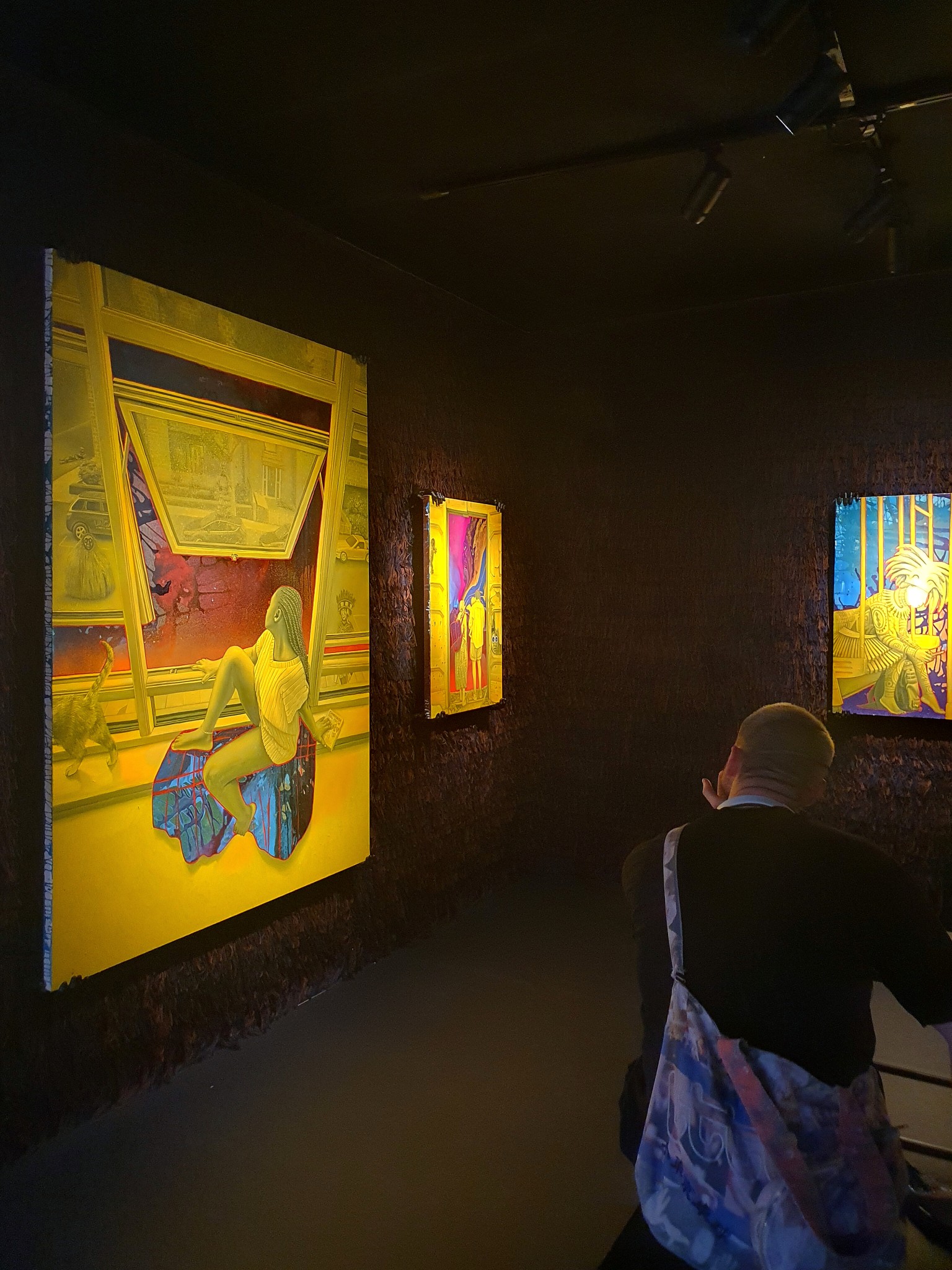
The yellow figures gave that offering a powerful visual presence.
“First of all, black people are always painted with dark colours,” Nwadiogbu told me, explaining his approach to representation. “And I don’t mind that, that’s the artist’s way of seeing blackness.”
“But I see blackness as vibrant, as active, as the brightest in the room.”
— Ken Nwadiogbu
Against the surrounding textiles, that vibrancy was unmistakable. His explanation made the whole space feel connected, with the display carrying as much meaning as the images it held.
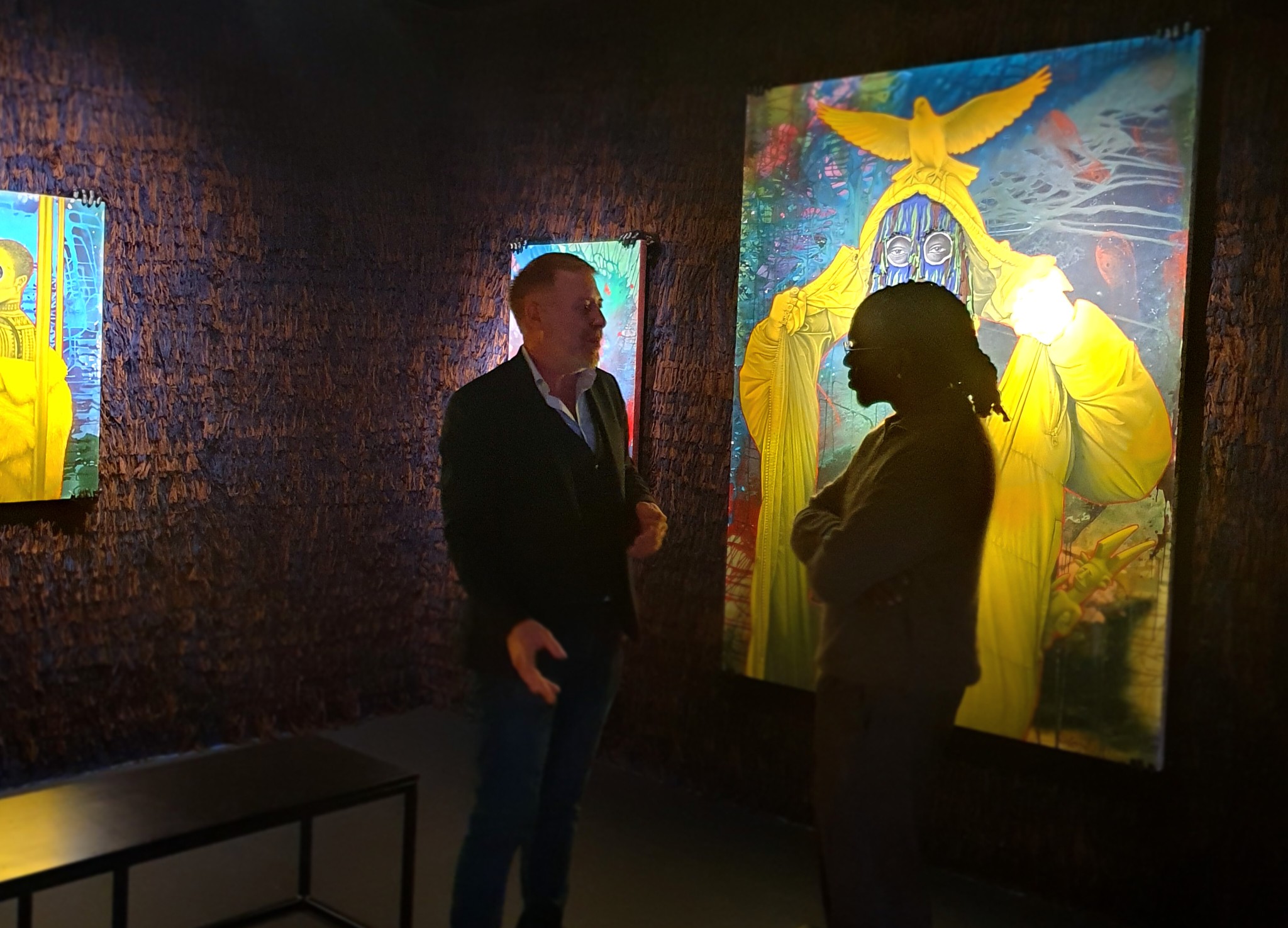
Where to find Artist at Frieze London: Degussa Lounge · Young Generation Art Award presentation
3. Ryoji Ikeda’s data.graph [nº1] : three screens worth slowing down for
![Three wall-mounted screens display fine lines and dense visual patterns in Ryoji Ikeda’s data.graph [nº1].](https://distracttv.com/wp-content/uploads/2026/10/ryoji-ikeda-data-graph-three-screens-frieze-2026.jpg)
At TARO NASU, Ryoji Ikeda’s data.graph [nº1] (2026) held my attention through the interplay of intricate visual patterns and sound. Across three screens, fine lines and dense formations invited a closer look, their small details giving the eye something new to follow.
I found the combination quietly hypnotic. The sound was integral to that experience, drawing me further into the audiovisual piece as I watched the patterns unfold. Data became something to spend time with: visual, rhythmic and engrossing.

![Close-up of a screen filled with tiny horizontal marks and coloured bars in Ryoji Ikeda’s data.graph [nº1].](https://distracttv.com/wp-content/uploads/2026/10/ryoji-ikeda-data-graph-screen-detail-frieze-2026.jpg)
Ikeda’s practice includes vast audiovisual installations that surround viewers with projected imagery and sound. Here, that sense of immersion felt concentrated into a more intimate encounter. Three monitors on a fair wall created a small sensory world, rewarding the decision to stop and look closely.
Where to find Artist at Frieze London: Stand Number A9 · TARO NASU
4. Steph Huang: food, humour and the ethics of consumption
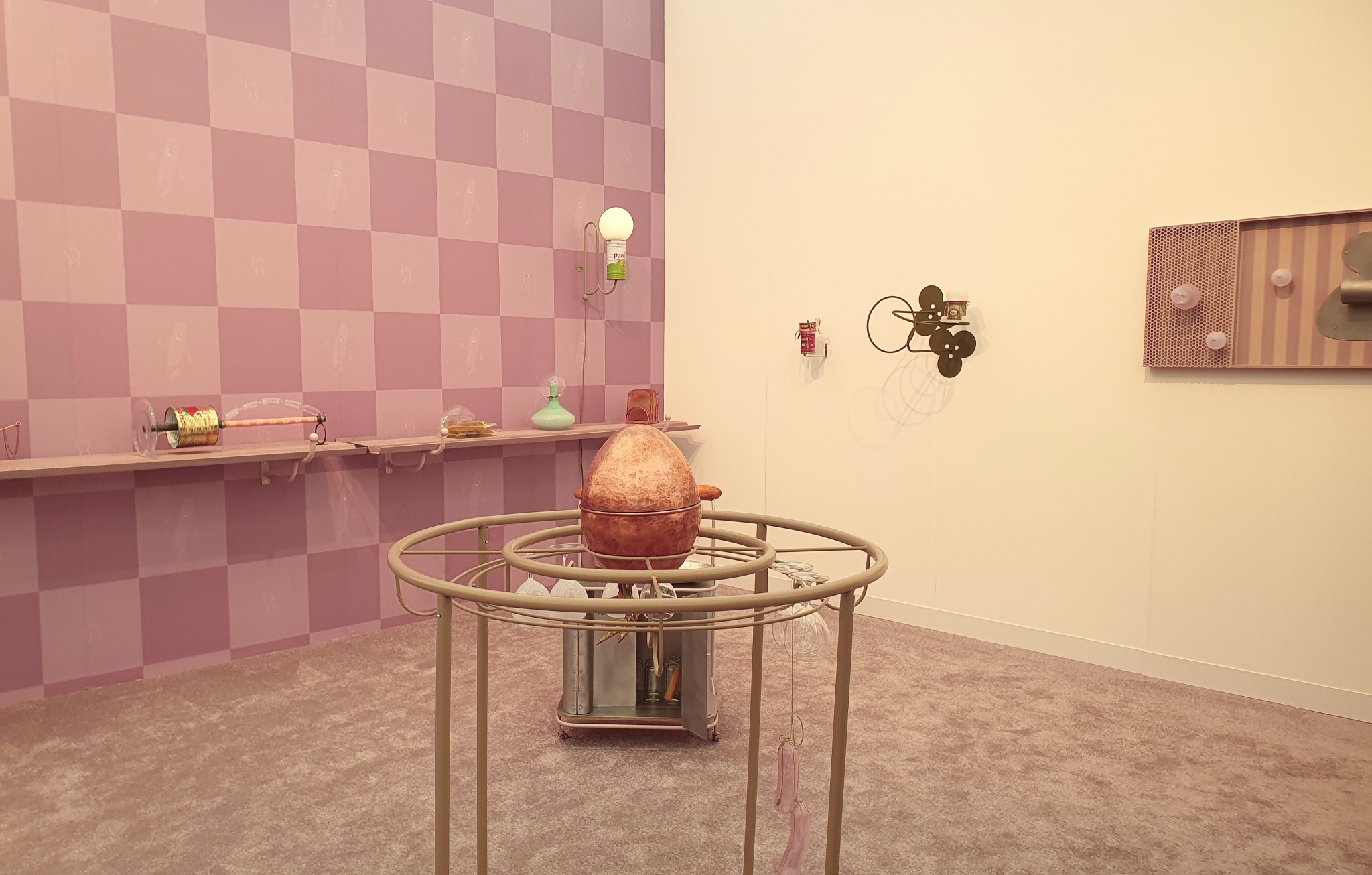
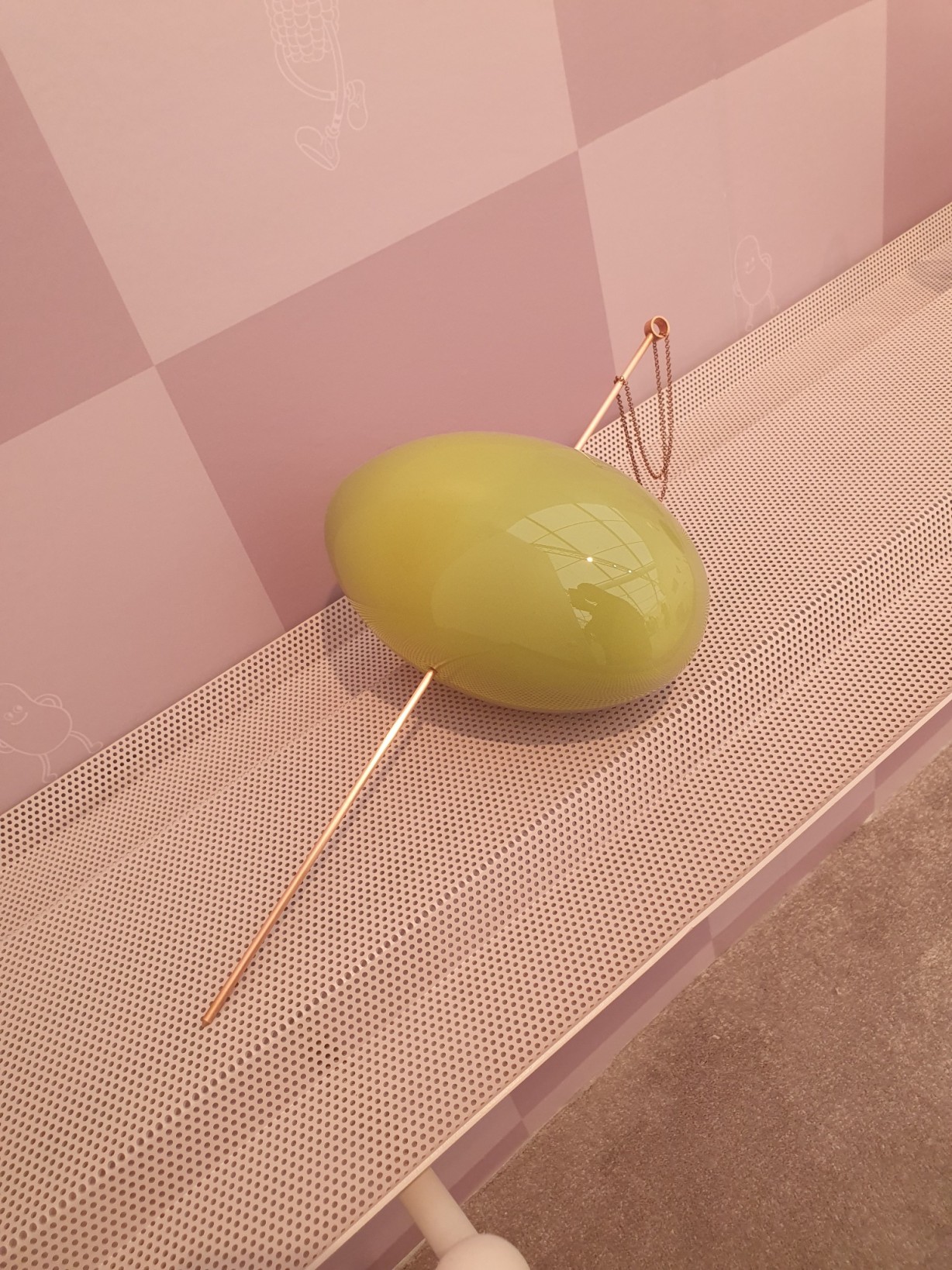
Oversized olives, repurposed food tins and pink checked walls gave Steph Huang’s presentation at Public Gallery an immediately playful appeal. Yet the metal shelving and serving trolleys introduced an almost clinical quality. I was drawn to that tension in the display: food made visually enticing, then placed under examination.
A bowl of pink syrup particularly caught my attention. Presented on a metal trolley, it gave an industrial ingredient the ceremony of something served on a silver platter. There was humour in that gesture, but also a question about how presentation shapes what we find desirable.
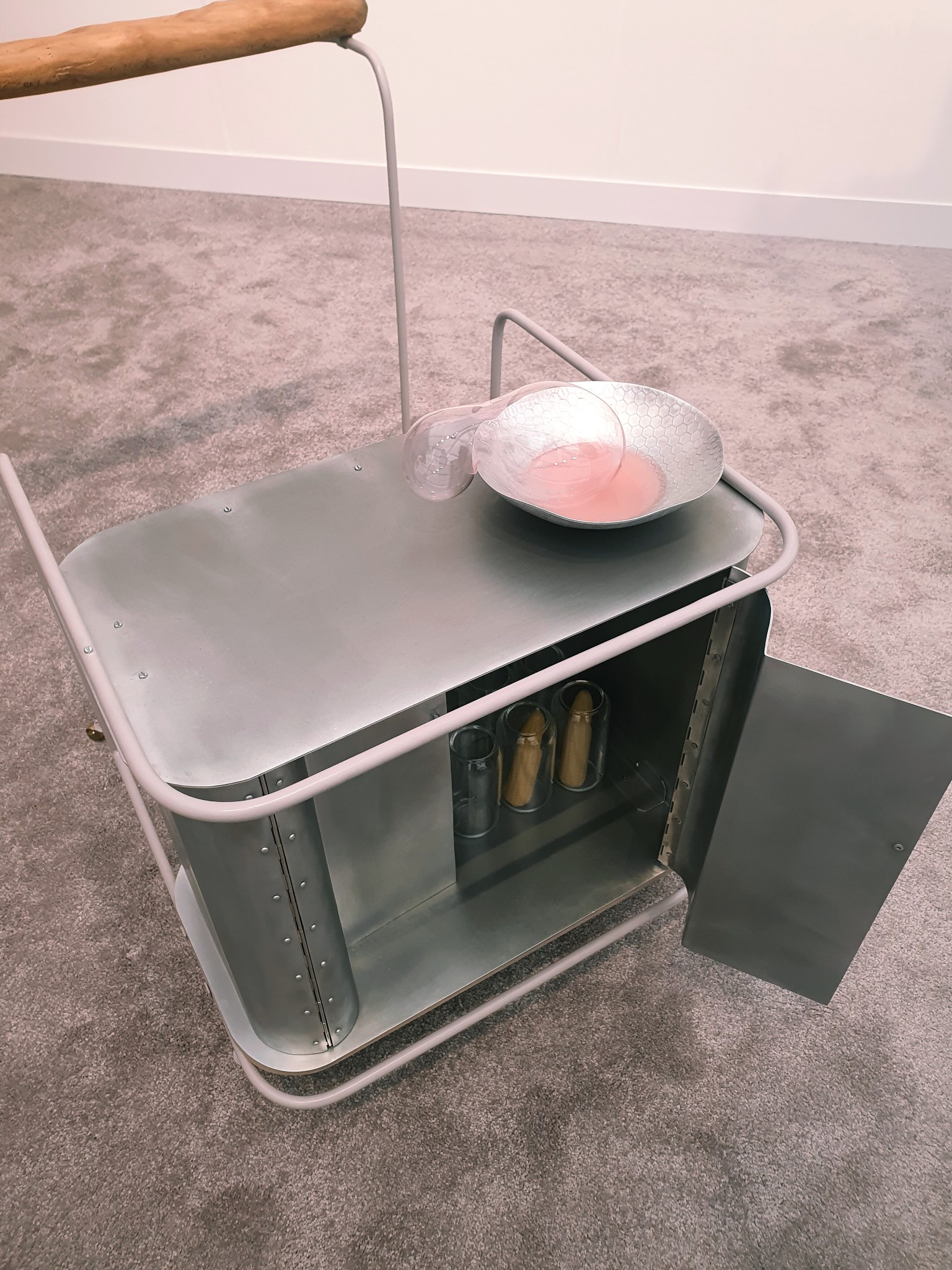
Speaking with the gallery representative brought the installation’s concerns into focus: where our food comes from, how it reaches us and the ethical questions behind its production. Huang’s practice examines systems of mass production and commerce, including the food industry’s impact on the natural environment. Glass, cast metal and repurposed packaging give those concerns a tangible, often witty form.
The representative also pointed out the tinned tomatoes, bringing the questions behind the display into an everyday context. That familiar tin we reach for when making dinner became a prompt to consider its journey: who produced it, under what conditions, and what remains hidden behind the packaging. I was drawn in by the humour and striking presentation, then left thinking about the food industry’s responsibilities and our own place within it.
Where to find Artist at Frieze London: Stand Number F25 · Public Gallery · Focus
5. Lea Cetera’s You can’t have it all: a glass biological clock
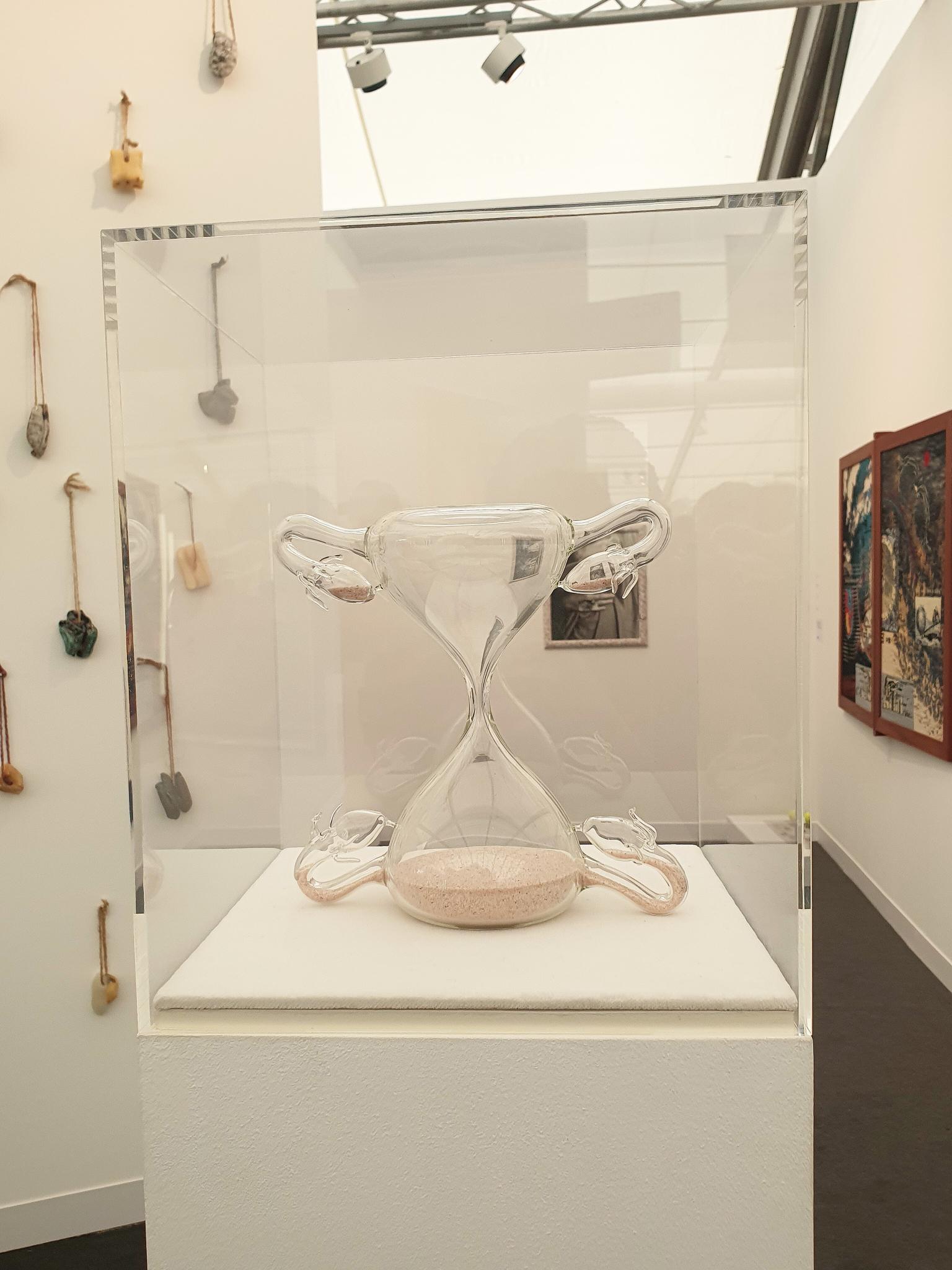
A glass hourglass took on an immediately bodily form in Lea Cetera’s You can’t have it all (2022). Made from borosilicate glass and sand, its curves echo a uterus and fallopian tubes, bringing the familiar idea of the “biological clock” into sculptural form.
The title sharpened that association. Looking at it, I thought about the promise that women can have it all, and the qualification that so often follows: just not all at the same time. Career, motherhood, independence and ambition become a scheduling problem, with women expected to make the timings work.
Inside its clear display case, the hourglass remained beyond reach. I couldn’t turn it over and start again. For me, that distance added to the sense of a deadline over which we have limited control.
What stayed with me was the tension between the delicacy of the object and the weight of those expectations. Its title could read as a warning, a taunt or a challenge: who decides what “having it all” means, and why are women so often asked to account for what they choose?
Where to find Artist at Frieze London: Stand Number B34 · Phillida Reid
Taken together, these works touched on questions shaping contemporary Western society: how identity travels across cultures, who sets expectations around gender and motherhood, and what our consumption habits conceal. They also considered how we might inhabit virtual worlds, with collaboration offering one possibility for their future. Their perspectives reached beyond the West, bringing different cultural experiences into those debates. For me, this is part of what art should do: reflect the society around it and question the assumptions we have grown comfortable with.
Frieze London 2026 runs until 18 October at Regent’s Park, London.
Connect with Distract! Watch us on Youtube, like us on Facebook & follow us on Twitter and Instagram.
