

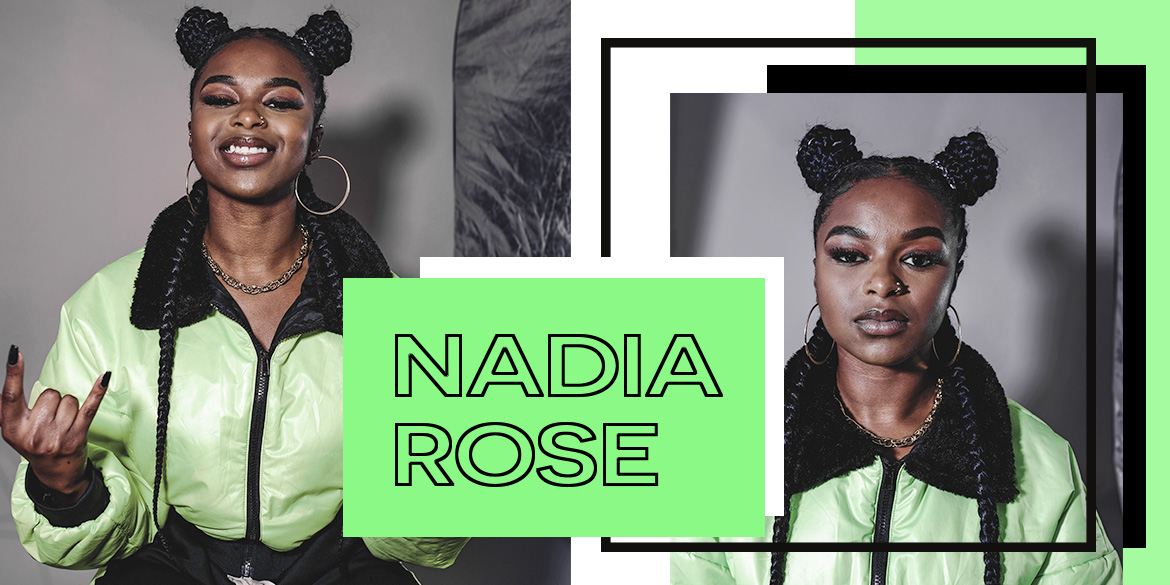
Originally published on 21 March 2019. Updated by the Distract editorial team in August 2026 with current career context.
In this exclusive Nadia Rose interview, the Croydon rapper discusses writing for Rihanna, attracting Drake’s attention and what the future of UK rap looked like from her perspective in 2019.
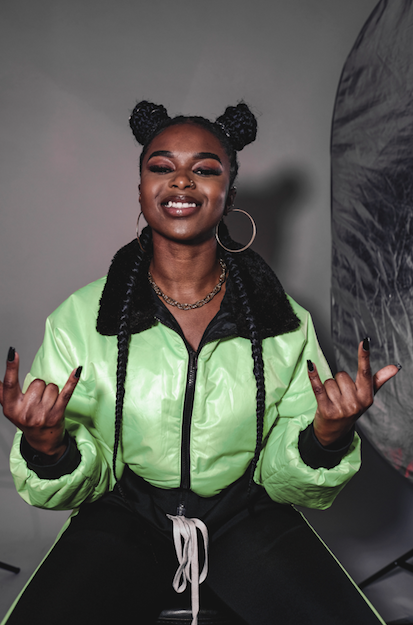
Recorded following a Distract editorial shoot at Roberto Vivancos Studio, the conversation captures an artist who had already built a reputation for sharp lyricism, bold visuals and an unmistakably confident presence.
Who is Nadia Rose?
Nadia Rose emerged as one of the most exciting voices in British rap during the mid-2010s.
Raised on the Whitehorse Road Estate in Croydon, she spent years developing her craft before breaking through with tracks including Station and Skwod. The video for Skwod, directed by Reece Proctor, won Best Video at the 2016 MOBO Awards.
Rose subsequently placed fifth in the BBC Sound of 2017 poll alongside a generation of British artists that included RAYE, Jorja Smith, Ray BLK and Rag’n’Bone Man.
Her debut EP, Highly Flammable, followed in 2017, establishing a style that could move between grime, hip-hop, dancehall and pop without losing its distinctly South London identity. Although Stormzy is her cousin, Rose had already created a recognisable voice, image and musical identity of her own.
Nadia Rose on writing for Rihanna
One of the most compelling parts of the interview concerns Nadia’s work with Rihanna.
In 2017, Nadia joined a London writing camp connected to Rihanna’s long-awaited ninth album, commonly referred to as R9. The opportunity revealed another side of her creativity: not only an MC and performer, but a songwriter capable of adapting her ideas for one of the world’s biggest artists.
In the interview, Nadia reflects on the experience and the different level it unlocked within her songwriting.
Drake, international attention and UK rap going global
The conversation also turns to Drake appearing in Nadia’s DMs and the growing international attention surrounding her music.
Rather than reducing that moment to celebrity name-dropping, it demonstrates how closely audiences outside Britain were watching the UK rap scene. Artists from Croydon, South London and across the country were no longer being treated as purely local voices.
Watch the original interview for Nadia’s account of what appeared in her messages and how she responded to the attention.
‘Airplane Mode’ and the importance of switching off
At the time of the original interview, Nadia had recently released Airplane Mode.
Built around a bright, tropical production, the track explores the desire to disconnect from outside noise and protect your own energy. Its relaxed sound contrasts with Nadia’s naturally forceful delivery, demonstrating her ability to move beyond a single version of British rap.
The song also captured the position she occupied in 2019: navigating industry expectations while attempting to retain control over her sound and direction.
Where is Nadia Rose now?
Since this interview was originally published, Nadia has continued releasing music and collaborating across British rap, hip-hop and electronic music.

She released the First Class EP in 2020, featuring tracks including Sugar Zaddy, Too Bad and Higher. Further singles and collaborations followed throughout the decade.
Her 2026 releases have included BUSY with Sentimento, Hop with Lil Sykes and Kiss My Shoes with Layyah, introducing her voice to new club, bass and UK hip-hop audiences.
Why this Nadia Rose interview is worth revisiting
The value of this interview extends beyond its references to Rihanna and Drake.
It preserves a moment when a new generation of Black British women—including Nadia Rose, Little Simz, Ray BLK and Stefflon Don—was expanding the possibilities of UK rap. These artists were challenging assumptions about how a British rapper should sound, dress and build a career.
Nadia’s confidence was never simply part of her presentation. It was fundamental to the way she wrote, performed and navigated an industry that did not always make space for artists who wanted control over their own identity.
Revisited in 2026, the interview captures both the excitement surrounding her emergence and the determination required to keep creating beyond the initial wave of industry attention.
Listen to Nadia Rose on Spotify.
Nadia Rose photographed by @uyiosa at Roberto Vivancos Studio for Distract, 2019.
Connect with Distract! Watch us on Youtube, like us on Facebook & follow us on Twitter and Instagram.
